
Defibrillators & Emergency Preparedness
An AED can be the difference in a cardiac arrest. Here’s how to choose, maintain and keep one ready — with legal duties clearly separated from recommended good practice.
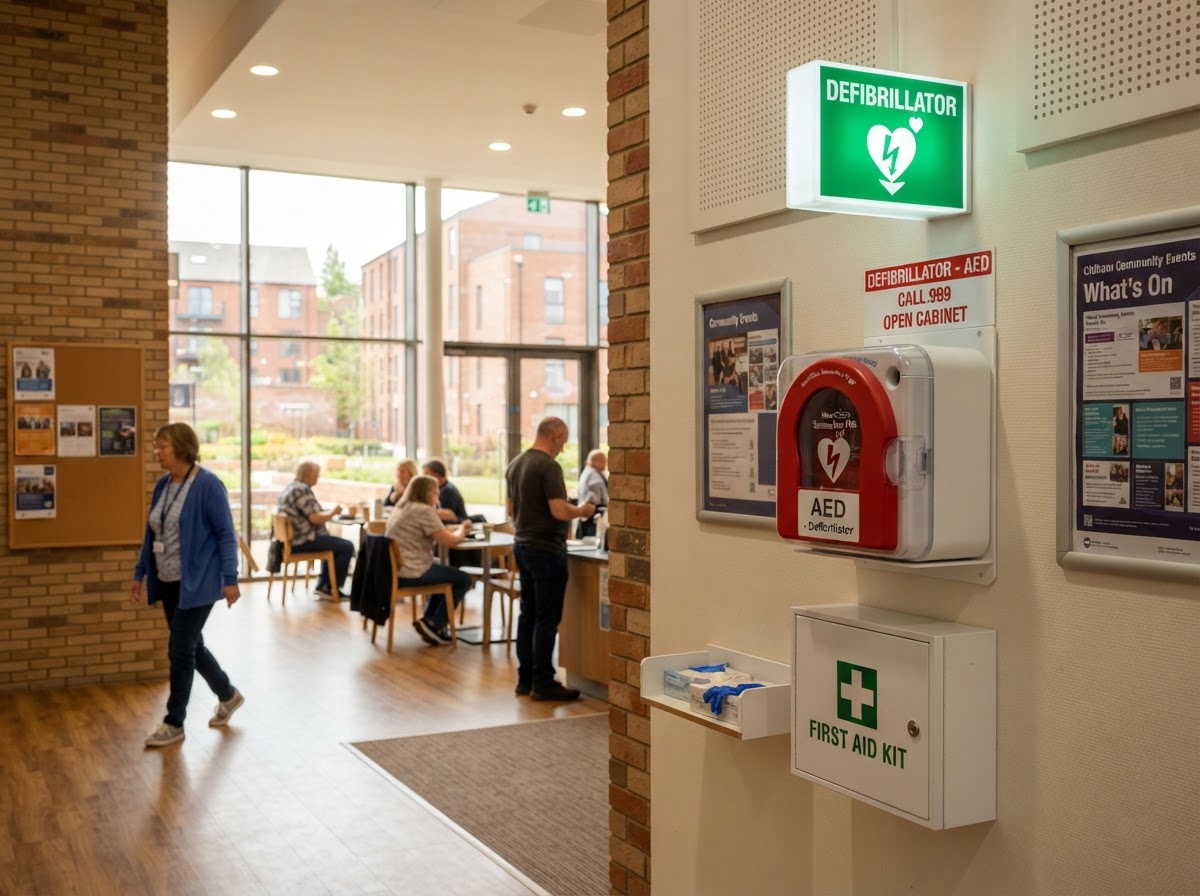
An AED guides rescuers with clear voice prompts. Familiarity builds rapid confidence.
“Having a defibrillator is the start. Keeping it ready is the plan.”
Legal clarity: HSE does not impose a blanket statutory duty on every faith organisation to install an AED. However, where an AED is provided, maintaining its operational readiness falls under general duties of care.
Anyone can use a public AED: No certificate or formal qualification is legally required to use a public-access AED. The machine gives automatic voice and visual instructions. Lack of formal training must never delay emergency resuscitation.
Workplace AEDs (PUWER): Where an employer provides an AED following a workplace needs assessment, HSE notes that PUWER regulations apply — requiring appropriate information, written operating instructions, and regular maintenance checks.
Resuscitation Council UK (RCUK) Recommended Guardianship Checklist
Practical AED Readiness Checklist
Use this as a quick monthly review. These are recommended practices, not a blanket legal requirement for every venue.
Already Have a Defibrillator?
Check whether your AED is accessible, maintained and ready to use — our readiness tool includes a dedicated AED section.